
Expand From Egypt to Saudi Arabia: Finance Checklist
22 November 2026 · 12 min read
اقرأ المقال بالعربية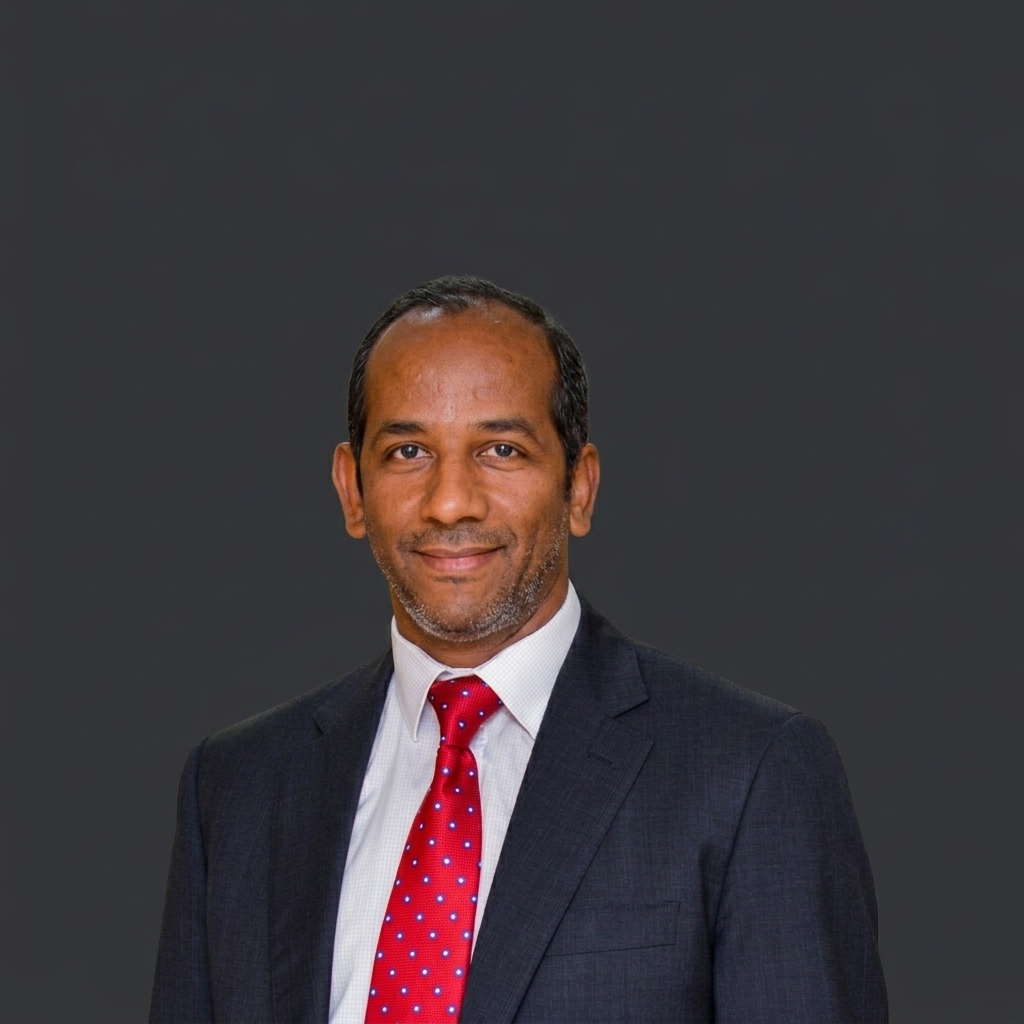
Hazem Kassem
Reviewed by Hazem Kassem — Founder & Managing Director, CMA, ACCA Certificate in IFRS Read bio →
Most Egyptian companies that open in Saudi Arabia plan the launch and forget to plan the cash. The licence is issued, the office is leased, the first hires arrive, and the Riyadh branch starts to sell. Then month after month the Cairo head office keeps transferring money, and nobody can say when it will stop.
If you plan to expand your business to Saudi Arabia from Egypt, the market opportunity is usually not the problem. The financial plan is. My view after 25 years as a CFO: a new market should be approved on three numbers. The monthly revenue needed to break even, the peak cash the parent company must fund before the branch pays for itself, and the tax and workforce rules that apply from day one. This guide explains each, with the current Saudi rules and a worked example.
Before you expand your business to Saudi Arabia from Egypt: the three numbers
- Break-even revenue. Monthly fixed costs in Saudi Arabia divided by your gross margin. This tells you how big the branch must become, not just whether it can sell.
- Peak cash need. The deepest point of cumulative cash, including set-up costs, the months before revenue starts and the time customers take to pay. This is the amount the parent must be able to fund.
- Tax and workforce cost. Income tax or zakat, withholding tax, VAT, e-invoicing and Saudization. These start with registration and hiring, not with profit.
Corporate tax: 20% income tax, 2.5% zakat, or both
Which regime applies depends on who owns the Saudi company. ZATCA, the Zakat, Tax and Customs Authority, applies the Income Tax Law to resident companies with respect to shares owned by non-Saudi partners, and to non-residents doing business through a permanent establishment in the Kingdom (ZATCA).
| Ownership of the Saudi company | What applies |
|---|---|
| 100% Egyptian (non-GCC) owners | Corporate income tax at 20% of net adjusted profit |
| 100% Saudi or GCC owners | Zakat at 2.5% of the zakat base (broadly, the company's net worth as calculated for zakat) |
| Mixed, for example 60% Egyptian and 40% Saudi | Income tax on the 60% share of profit and zakat on the 40% share of the zakat base |
The 20% rate and the mixed-ownership split are set out in PwC's Worldwide Tax Summaries for Saudi Arabia, last reviewed 29 July 2026 (PwC). Oil and hydrocarbon production is taxed at higher rates, which will not apply to most Egyptian companies.
Note the difference in what is taxed. Income tax is charged on profit, so a loss-making first year produces no income tax. Zakat is charged on the zakat base, which reflects the company's net worth as calculated for zakat rather than its profit alone, so it can be payable even in a weak year.
Withholding tax when money flows back to Egypt
Payments from a Saudi company to a non-resident are subject to withholding tax, deducted by the Saudi payer. ZATCA's circular lists the domestic rates: 20% on management fees, 15% on royalties, 5% on dividends, 5% on technical and consulting services (even when performed entirely abroad), 5% on loan returns and rent, and 15% on other services from Saudi sources (ZATCA, WHT circular). If the Cairo head office charges the branch a management fee, 20% is withheld unless a treaty reduces it.
Saudi Arabia and Egypt have a double taxation agreement, signed on 8 April 2016 and in force since 1 July 2017 (ZATCA). It can reduce withholding on some payments and prevents the same income being taxed twice, but relief has conditions such as beneficial ownership. Structure intra-group charges with the treaty in hand.
VAT: 15%, and when it is actually due
VAT is charged at 15% on taxable goods and services; ZATCA states the rate rose from 5% to 15% on 1 July 2020 (ZATCA). Registration is mandatory once taxable supplies over twelve months exceed SAR 375,000.
Timing is what affects cash. Under ZATCA's invoicing guideline, VAT becomes due on the date of supply, the date the tax invoice is issued, or the date payment is received, whichever comes first (ZATCA, invoicing guideline). The same guideline confirms that if you issue an invoice before the customer pays, you must declare the VAT in that period even if no money has arrived. The return and payment are due by the last day of the month after the tax period. Taxable persons with annual revenue above SAR 40 million file monthly; others file for longer periods.
Two reliefs matter for a new branch. ZATCA allows cash-basis accounting for VAT for establishments whose annual supplies do not exceed SAR 5 million, and simplified invoices for smaller transactions (ZATCA, VAT). Under the cash basis, VAT follows collections rather than invoices, which removes most of the financing burden in the early years.
E-invoicing (FATOORA)
Since 4 December 2021, resident VAT taxpayers must issue invoices through a compliant electronic solution, not by hand or in spreadsheets. Phase two requires integration with ZATCA's Fatoora platform and is being rolled out in waves; wave 25 covers taxpayers whose VAT-able revenue exceeded SAR 187,500 in any of 2022 to 2025, with integration due by 1 February 2027 (ZATCA). Choose an accounting system that is already compliant before you issue your first invoice.
Saudization (Nitaqat): how it affects your hiring plan
The Ministry of Human Resources and Social Development (HRSD) classifies each entity into one of five ranges based on its Saudization rate: Red, Low Green, Medium Green, High Green and Platinum. The rate is Saudi employees divided by total employees, measured across all branches of the same economic activity. Since the 2021 update, the required rate rises smoothly with headcount using a published formula, and differs by activity (HRSD, Nitaqat Mutawar guideline).
The range decides what you can do. Under HRSD's procedural manual, an entity in the Red range cannot apply for new visas, cannot issue work permits for new expatriates, cannot renew its expatriates' work permits, cannot receive transferred workers and cannot open a new branch file (HRSD, procedural manual). Low Green keeps renewals but stops new visas. For a branch planning to bring staff from Egypt, Saudization is therefore a constraint on the plan, not an HR detail.
Illustration: for "Business Services", HRSD's guideline gives the Low Green threshold from 2024 as 1.03 × ln(headcount) + 33.28. For a 10-person entity that is about 35.7%, so at least 4 of the 10 staff would need to be Saudi to stay out of Red. Values are updated by HRSD, small entities have specific rules and your activity may differ, so confirm your exact requirement with the Nitaqat calculator on Qiwa before you budget salaries. Saudi salaries, social insurance and training costs belong in the plan from month one.
Worked example: a Riyadh branch that breaks even on paper and still needs funding
Example (illustrative, assumptions stated): an Egyptian services and trading company opens a Riyadh branch. One-off set-up costs (licensing, legal work, fit-out and deposits) are SAR 400,000; use your own quotations. Fixed costs are SAR 120,000 a month for office, staff and running costs. Gross margin is 40%. No revenue in months 1–3, SAR 100,000 a month in months 4–6, SAR 250,000 a month in months 7–12, and SAR 350,000 a month in year two. Customers pay in 90 days. Costs are paid in the month they arise. Figures are before tax, zakat and VAT timing.
Break-even revenue is 120,000 ÷ 40% = SAR 300,000 a month. The branch passes it in month 13.
| Measure | Result |
|---|---|
| Year-one operating result | SAR (720,000) |
| Year-two operating result | SAR 240,000 |
| Month the branch becomes profitable | Month 13 |
| Month cumulative cash reaches its lowest point | Month 15 |
| Peak cash need funded by the parent | SAR 2,110,000 |
| Cumulative cash position after 24 months | SAR (1,930,000) |
The branch is profitable from month 13, but cash keeps falling until month 15 because customers pay 90 days after invoicing. After two full years, the parent has still funded SAR 1.93 million.
Now add the rules above. If the company is 100% Egyptian-owned, 20% income tax on a SAR 240,000 year-two profit would be SAR 48,000, before any relief for the year-one loss; confirm loss carry-forward with your adviser. If the branch invoices on accrual, at SAR 250,000 of monthly sales each invoice carries SAR 37,500 of VAT, so with 90-day collections about three months of VAT, roughly SAR 112,500, has been invoiced but not collected at any time; whether you finance it depends on your filing period, your input VAT and whether the cash basis applies. And if year-two revenue is 20% lower, at SAR 280,000 a month, the branch never reaches break-even: it loses SAR 8,000 every month.
Finally, currency. If the branch is funded from Egyptian pounds, each transfer is exposed to the exchange rate at the time. Plan the funding in riyals and treat the EGP cost as a range.
The financial checklist before you expand
- Structure first. Decide the legal form and ownership split; it decides income tax, zakat or both.
- Map intra-group charges (management fees, royalties, services) against withholding tax and the Egypt–Saudi treaty.
- Build a monthly 24-month cash plan in SAR, including set-up costs, ramp-up, collection days, VAT timing and tax payments.
- Calculate break-even revenue and compare it with what comparable companies achieve in the market.
- Fund the peak, not the average, with an agreed limit and a buffer.
- Register for VAT, choose cash or accrual basis where allowed, and set up compliant e-invoicing before the first invoice.
- Check your Nitaqat requirement for your activity and planned headcount, and budget Saudi hires from month one.
- Set review points: the revenue, margin and month at which you will re-plan, add capital or step back.
For the cash mechanics behind this plan, read why growth eats cash. Our Riyadh page explains how Axcell supports companies operating in Saudi Arabia, and our free 13-week cash flow and Saudi VAT invoice templates help with the first months.
Common mistakes
- Approving the expansion on year-two profit. The funding need sits in the first 12 to 18 months.
- Charging head-office fees without checking withholding tax. A 20% deduction on management fees changes the group's cash.
- Treating VAT as neutral for cash when invoicing on accrual with slow collections.
- Planning to staff the branch mainly from Egypt without checking the Nitaqat range that headcount produces.
- Copying Egyptian cost and price assumptions into the Saudi plan.
Frequently asked questions
What is the corporate income tax rate in Saudi Arabia for an Egyptian-owned company?
The general rate is 20% of net adjusted profit, applied to the share of the company owned by non-Saudi, non-GCC shareholders. Saudi and GCC shareholders' share is subject to zakat at 2.5% of the zakat base instead. A company owned by both pays income tax on the foreign share and zakat on the Saudi share. Payments to non-residents also attract withholding tax of 5% to 20%.
When is VAT due in Saudi Arabia: on invoice or on payment?
VAT is due on the earliest of the supply date, the invoice date or the date payment is received, so an invoice issued before payment triggers VAT in that period. Returns and payment are due by the last day of the month after the tax period. Establishments with annual supplies of up to SAR 5 million may use cash-basis accounting, where VAT follows collections.
How does Saudization affect a new branch?
HRSD's Nitaqat programme places each entity in a range from Red to Platinum based on its share of Saudi employees, with requirements that vary by activity and headcount. An entity in Red cannot get new visas or renew its expatriates' work permits. Check your requirement in the Nitaqat calculator on Qiwa before deciding how many staff to bring from Egypt.
How much cash do I need to open a branch in Saudi Arabia?
There is no standard figure. Build a monthly cash plan covering set-up costs, fixed costs before revenue starts, the ramp-up period, customer payment terms, VAT timing and taxes. The amount to fund is the lowest point of cumulative cash, not the first-year loss. In the illustrative example above, that peak was almost three times the year-one loss.
Where to start
Before you sign a lease in Riyadh, write down five things: break-even revenue, peak cash need, the tax regime your ownership triggers, the withholding tax on your planned intra-group charges, and the Saudization rate your headcount requires. If any of them is a guess, that is the first piece of work. Our fractional CFO service can build and run this plan with you.
If you want a senior finance professional to stress-test your Saudi expansion plan, book a free 30-minute consultation with Axcell Financial Consulting.
Sources
- Zakat, Tax and Customs Authority (ZATCA), Income Tax Regulations (last updated 21 October 2026).
- PwC Worldwide Tax Summaries, Saudi Arabia: Taxes on corporate income (last reviewed 29 July 2026).
- ZATCA, Tax Circular: Implementation of Withholding Tax under Double Taxation Agreements (January 2025).
- ZATCA, Egypt Convention (double taxation agreement; page updated 26 August 2026).
- ZATCA, About Value Added Tax and Value Added Tax (SME facilitation: cash basis up to SAR 5 million).
- ZATCA, Guideline for Tax Invoicing and Records under VAT Provisions (tax due date, registration threshold, filing periods).
- ZATCA, Wave 25 of the e-invoicing Integration Phase (24 July 2026).
- Ministry of Human Resources and Social Development, Nitaqat Mutawar Program guideline, version 2.0 and Ministerial Decision 182495 procedural manual.
All sources accessed 22 November 2026. The worked example is illustrative, with its assumptions stated in the text; all figures are calculated from those assumptions. Tax and labour rules change and depend on your structure and activity; this article is general information, not tax or legal advice. The checklist is Axcell's recommended approach.
Want to put this into practice?
Take our free 5-minute Financial Health Check — 16 questions across cash, planning, compliance and strategy. You'll get a personalised score and the recommended next step for your business.
From the CFO's Desk
One useful finance letter a month
Plain, practical notes from Hazem Kassem for business owners: one insight, one number to check, one rule or market update, and one free tool. No spam. Unsubscribe any time.
By subscribing you agree to receive these emails. We never share your details.